News and analysis on Asia's robotics industry from our research desk.
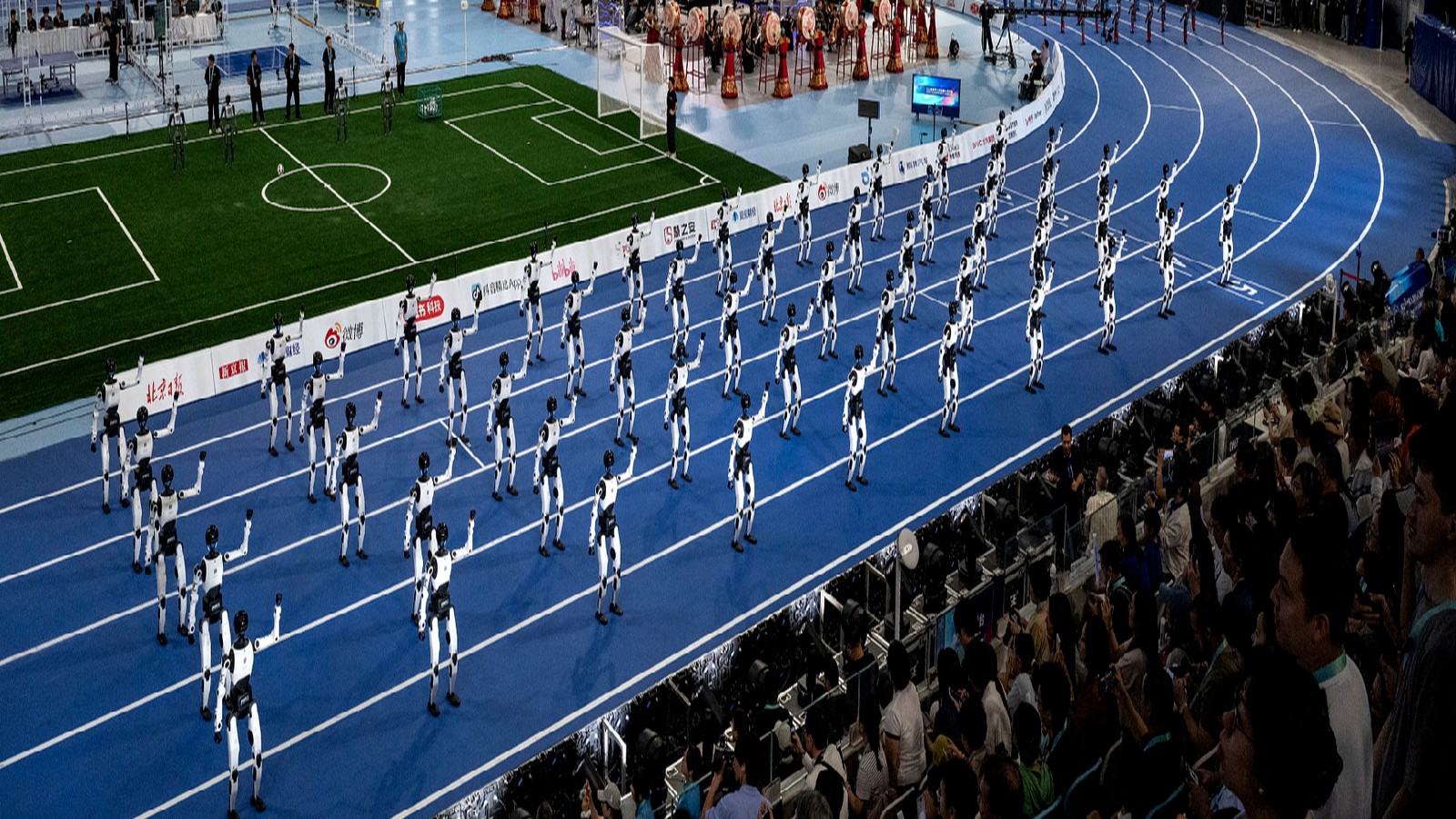
A humanoid robot ran 100m in 9.39 seconds at Beijing's World Humanoid Robot Games, beating Usain Bolt's human record, while a second platform cleared a 2.88m standing high jump. The comparison to human athletics doesn't hold under scrutiny, but the underlying actuator and control progress is real and more relevant to industrial buyers than the sprint headline suggests.
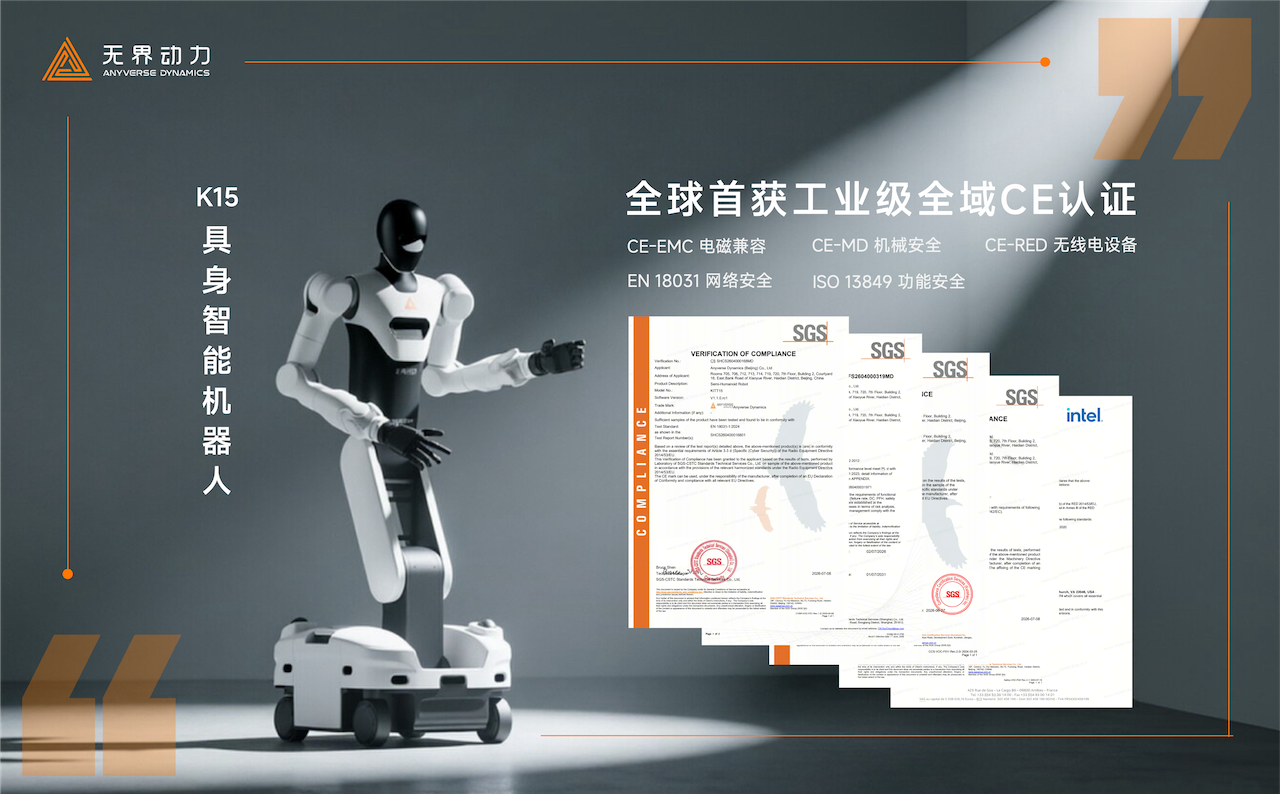
Anyverse Dynamics ran a fully operational coffee bar with its K15 wheeled humanoid at WRC 2026, in partnership with Korean chain HOLLYS, serving real customers unscripted for five days. The demonstration follows the K15's EU industrial CE certification in July and roughly US$100 million in orders, and is a more commercially realistic test than the week's sport-style humanoid demos.
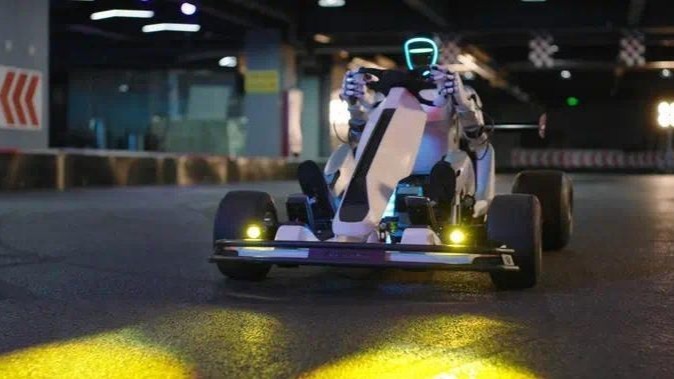
Beijing startup Gongsheng Zhixing argues that unified, end-to-end AI models outperform the industry's layered reasoning-and-control architecture, a claim it demonstrated by having a humanoid robot drive a go-kart around a closed track.
Humanoid makers are racing to collect European CE certificates, but the machinery regulation that replaces the current framework applies from 20 January 2027 and pushes any robot whose safety functions rely on machine learning into mandatory notified-body assessment. The AI Act's product deadline just slipped to August 2028; the machinery deadline did not move, and the safety standard written for legged robots is still a working draft.
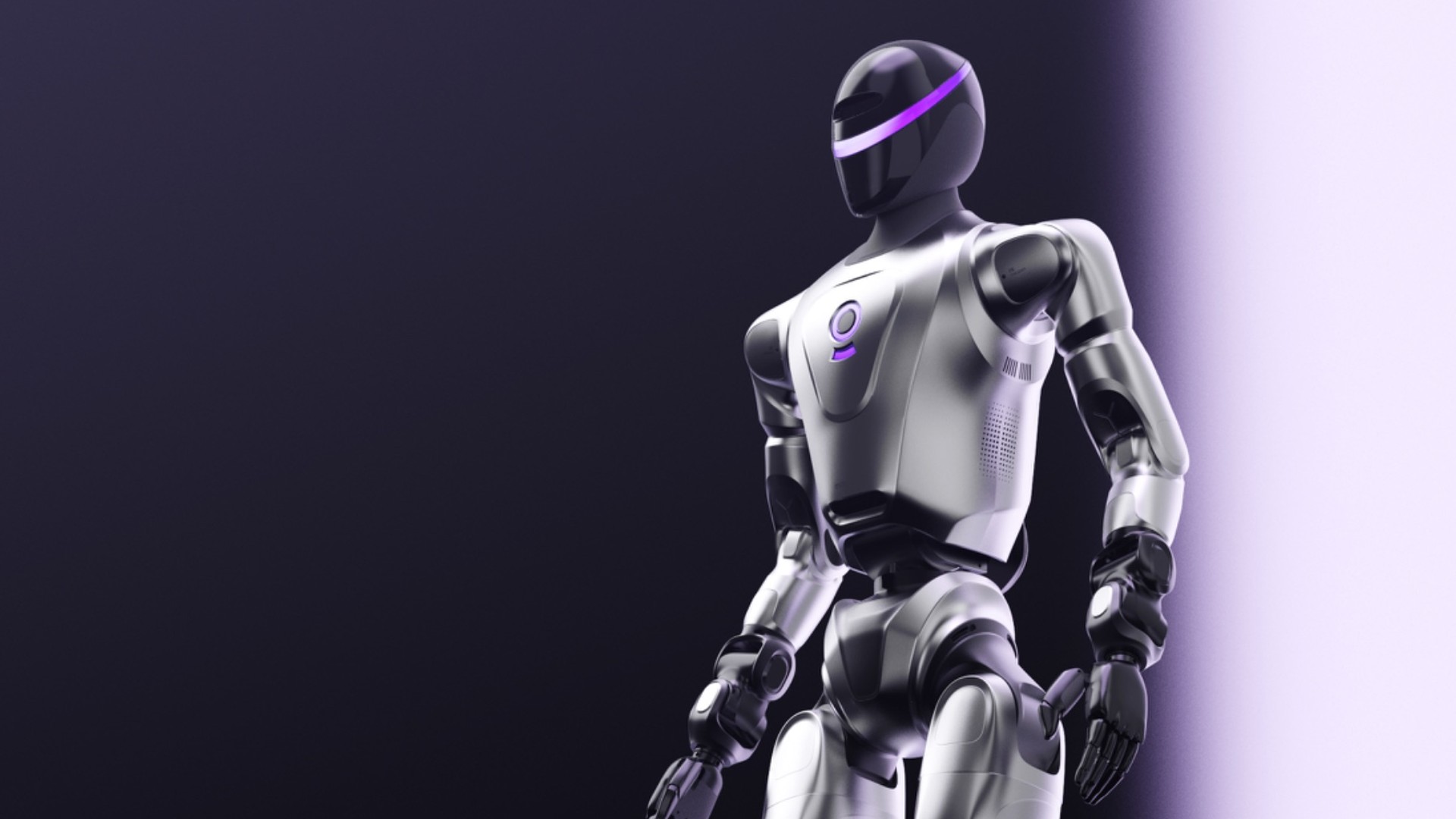
Galbot's first bipedal humanoid, ET1, rallied against a professional tennis player at Beijing's World Humanoid Robot Sports Games, broadcast live on national television. The demonstration tests whether Galbot's AstraBrain control model can generalize beyond scripted show-floor tasks.
Anyverse Dynamics says its K15 service robot is the first embodied-AI machine to clear the EU's complete industrial CE certification suite, including the EN 18031 cybersecurity standard, as it ships roughly US$97 million worth of orders to European customers.
Magic Atom staged three simultaneous live scenarios at WRC 2026, industrial manufacturing, smart logistics, and a Wuxi police partnership, backing its MagicBot D1 and MagicDog T1 hardware with a new vision-language-action model and over US$153 million in cumulative orders.
UBTECH replicated a customer's automotive production line inside its WRC 2026 booth, running Cruzr wheeled humanoids continuously through the five-day show alongside new Walker C1 and U1 models, while disclosing 2025 revenue above US$276 million and 13,838 robots sold.
Tianjin-based Galileo unveiled Galileo X at WRC 2026, a single platform it says unifies indoor AGV precision, off-road mobility, and legged terrain navigation, while opening its core interfaces to outside developers and citing deployments across 26 Chinese provinces.
Tsinghua PhD candidate Qin Shentao's year-old start-up OriginFlow has raised over US$69 million behind NeuroScale, a wristband-based system that reads muscle signals to capture the force and contact data embodied AI needs, packaged as transferable Human Tokens.
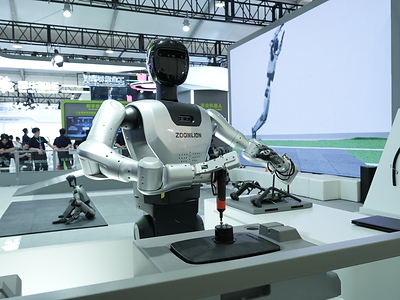
At WRC 2026, X-Humanoid, Zoomlion, and Mininglamp/Hikvision all pitched low-code orchestration layers over their robots. The near-term casualty isn't the factory worker, it's the systems integrator whose bespoke engineering work these platforms are built to commoditize.
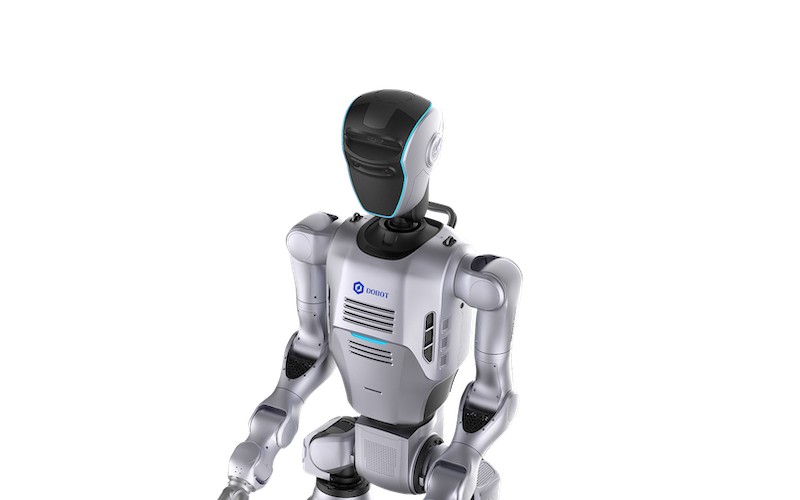
Noitom Robotics, with the Shanghai AI Laboratory, Dobot, and Shanghai Jiao Tong University, has released AdaPT, a system that learns professional tennis rally and serve styles from broadcast footage and executes them on the Unitree G1 and full-size Dobot Atom humanoids, including serving outside the lab with only a camera and a consumer tracker. It arrived two days after Noitom released HiPHI, a 617.5-hour high-precision motion dataset, and a week before RO-MAN 2026 in Fukuoka.