News and analysis on Asia's robotics industry from our research desk.
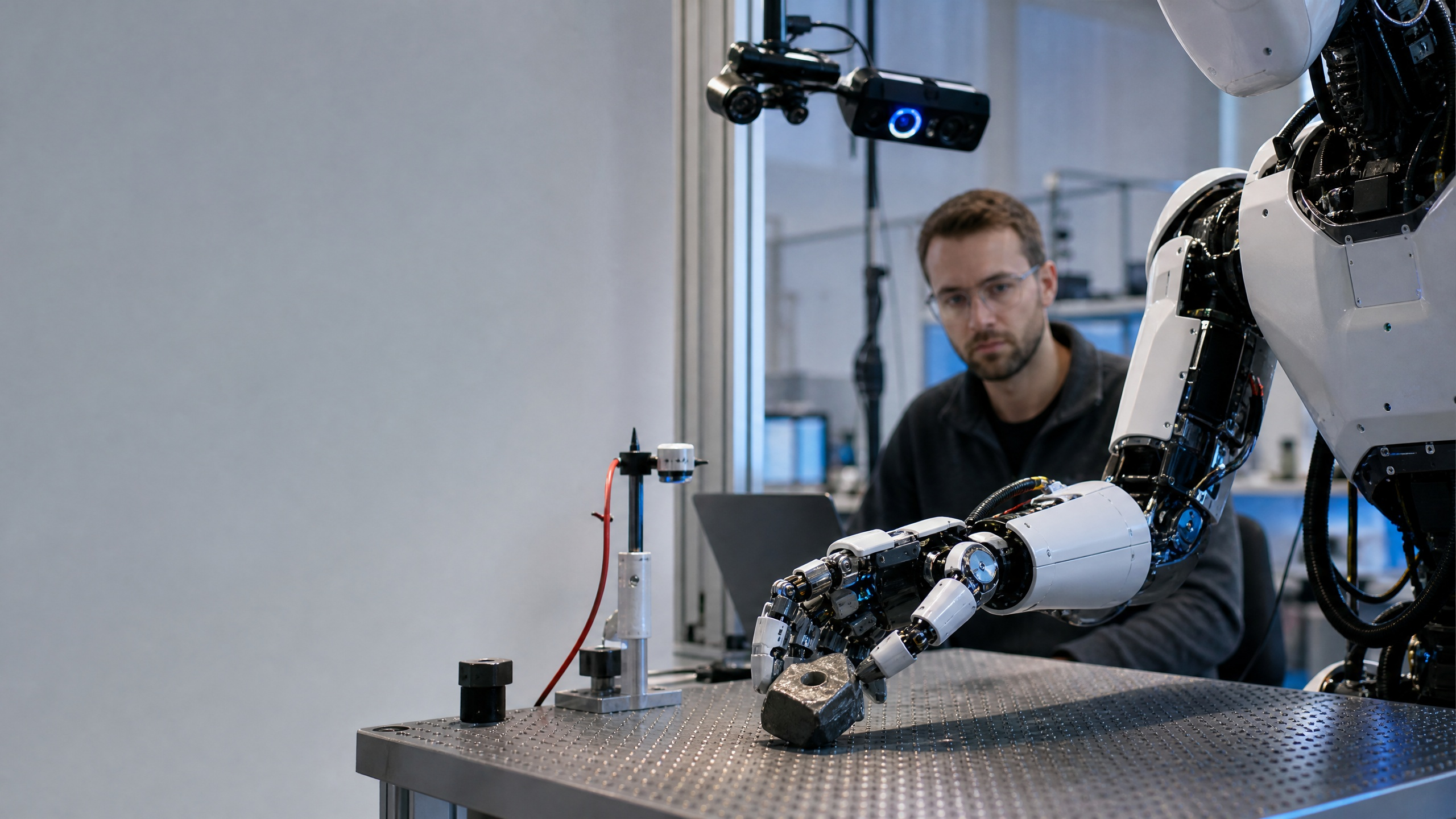
A plain-language roadmap for the next generation of humanoid robots, covering the technology ceiling, whole-body control, dexterous interaction, AI software, realistic cost drivers, and evidence-based 2026–2028 milestones.
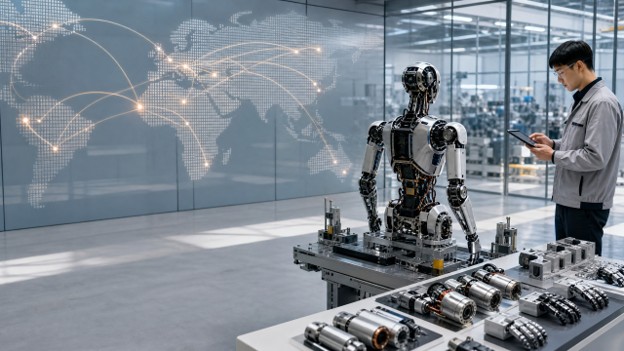
A plain-language guide to the global humanoid-robot production map: China’s factory and policy momentum, the industrial automation depth of Germany and Japan, Western software and process integration, and the market-access questions buyers should ask.
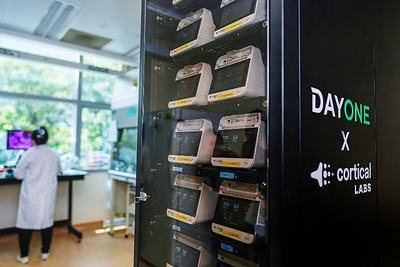
DayOne Data Centers, Cortical Labs, and National University of Singapore Medicine unveil Singapore's first biological data center prototype, featuring 20 Cortical Labs CL1 biological computing systems housed in a research validation rack at the National University of Singapore Life Sciences Institute.
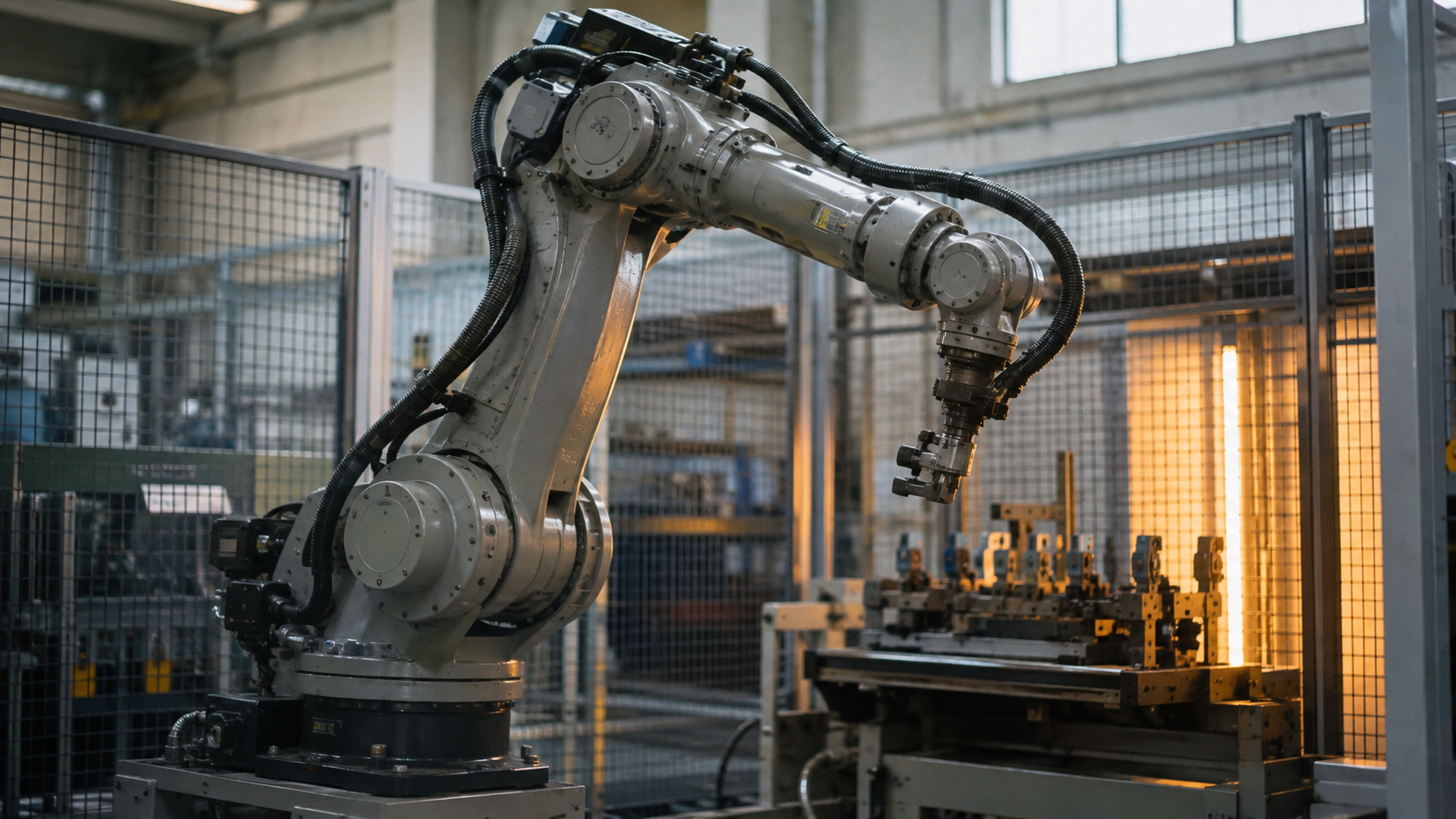
Six is not a design choice. A rigid body in three-dimensional space has exactly six degrees of freedom — three positions, three rotations. That is arithmetic, not engineering preference. A seven-axis robot cannot reach anywhere a six-axis robot cannot. It reaches the same places by different routes. Most buyers paying for the seventh axis think they are buying reach.
Capital activity this week pointed less to a single winning robot and more to a change in what investors and operators are willing to fund. Faraday Future is presenting robotics as a core growth engine with a raised 2026 shipping target, while LG and NVIDIA are linking models, data factories, manufacturing validation, and compute. The most important signal is that capital is moving toward integrated learning and deployment loops, although the evidence remains company-reported and commercial outcomes are still uneven.
The most consequential exhibition signal this week was not another product launch. It was the expansion of Beijing’s World Humanoid Robot Games into a large, multi-event test environment with 666 teams, 2,056 robots, and 1,301 competition sessions across 51 events. The event points to a new role for exhibitions: they are becoming places where suppliers, researchers, policymakers, and buyers can observe repeatable performance, not only watch demonstrations.
The most important technology development this week was the widening path from human video and general models to robot performance in real environments. Dyna Robotics describes a world-action model trained on more than one million hours of human video and reports human-to-robot transfer results. LG and NVIDIA are building a robot data factory around site validation, while Luminous Robotics is using operational corrections from solar construction to improve placement. The common thread is not a larger demonstration. It is a tighter learning loop between data, control, human intervention, and deployment.
The week’s commercial signal was a widening gap between visible hardware prices and the cost of making a robot productive. Bertelsmann quoted Unchained Robotics on a sharp fall in robot-arm prices, while Faraday Future disclosed price bands across humanoid and quadruped products and Luminous Robotics described a robots-as-a-service deployment in solar construction. The common lesson is that lower hardware prices expand the market, but utilization, interventions, support, integration, and the speed of learning decide whether a buyer earns a return.
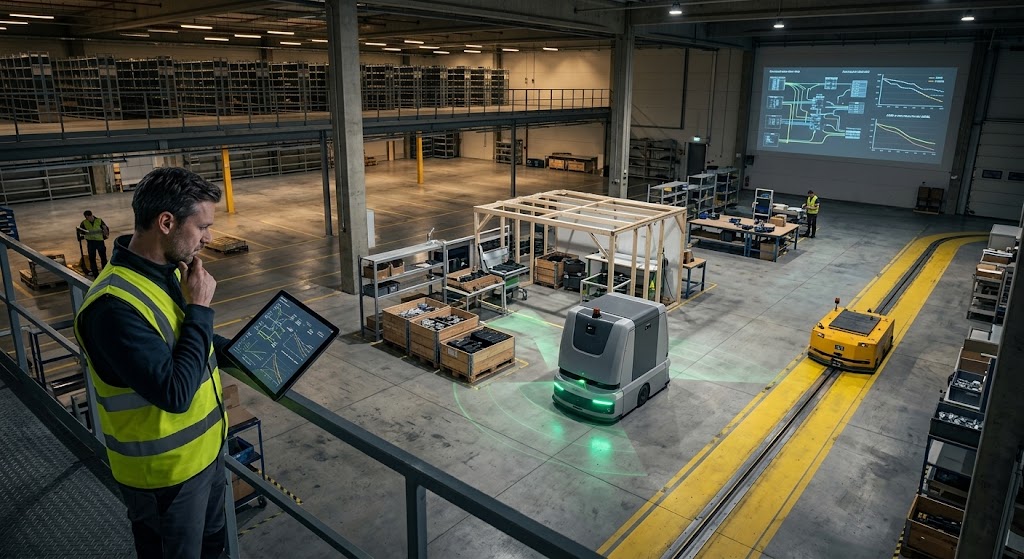
Every AMR vendor will tell you AGVs are obsolete. The data does not agree. When Interact Analysis revised its mobile robot forecast in 2025, it cut large-format AMR shipments harder than it cut AGVs. The two technologies are not competing on a ladder of intelligence. They are competing on a single question: how often does your floor plan change? Most buyers are answering the wrong question.
AceiiLab A1 is an AI-powered mobile tennis robot that combines artificial intelligence, autonomous mobility, and intelligent training systems to redefine sports robotics. By bringing advanced robotics technology into tennis practice, A1 explores a new generation of human-centered robotic applications beyond traditional automation.
A buyer-focused competitive map of five evidence-qualified humanoid brands, using official customer, exchange, procurement, and regulatory records rather than unsupported market-share claims.
Official public-award records provide budget references for humanoid robots, but only when buyers normalize configuration, integration, support, and regulatory scope.