News and analysis on Asia's robotics industry from our research desk.
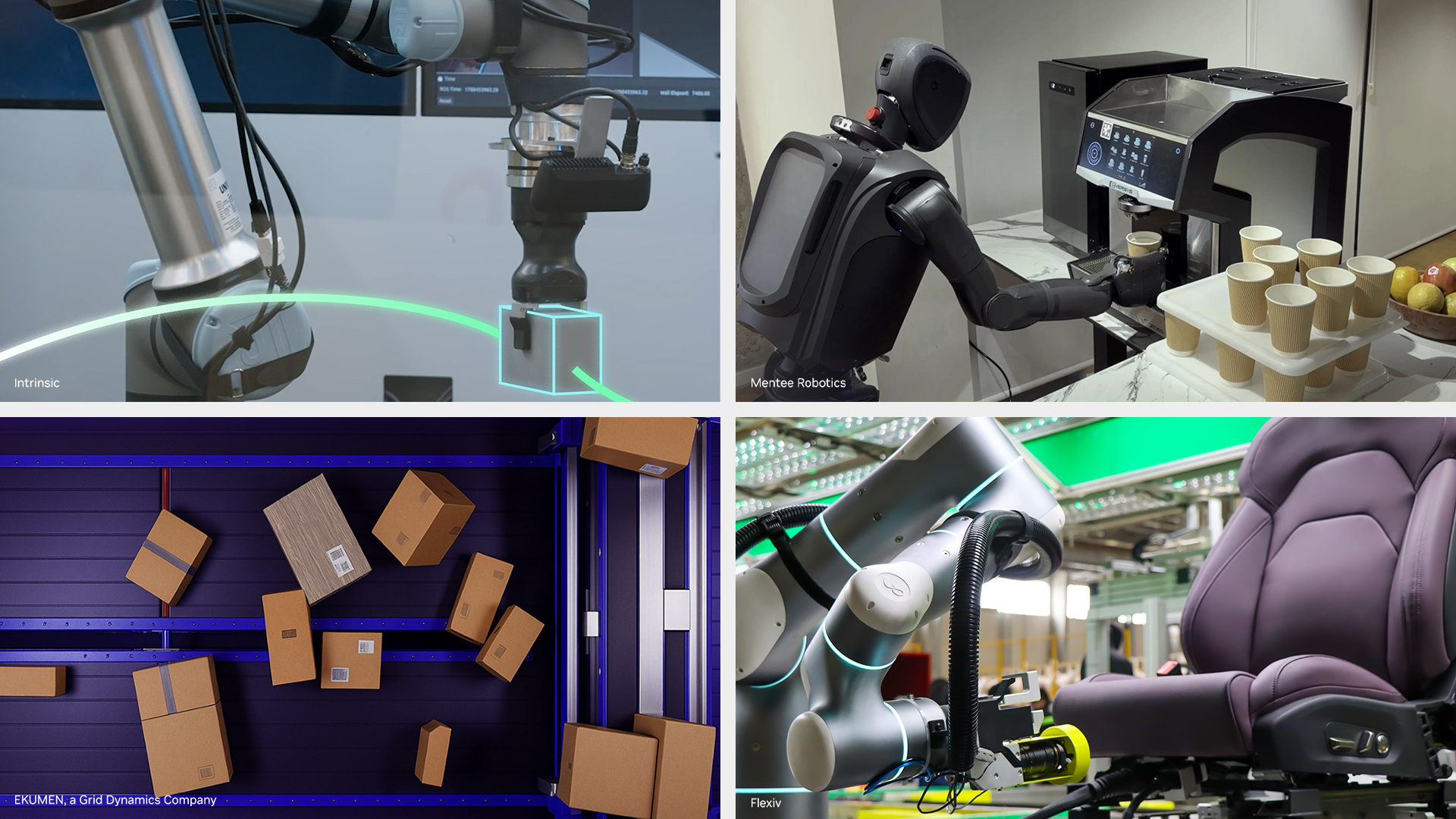
Jensen Huang resigned as NVIDIA's CEO effective immediately, with CFO Colette Kress stepping in as interim chief executive. The transition raises a roadmap question for the humanoid and industrial robotics makers built on NVIDIA's GR00T, Isaac and Jetson Thor stack.
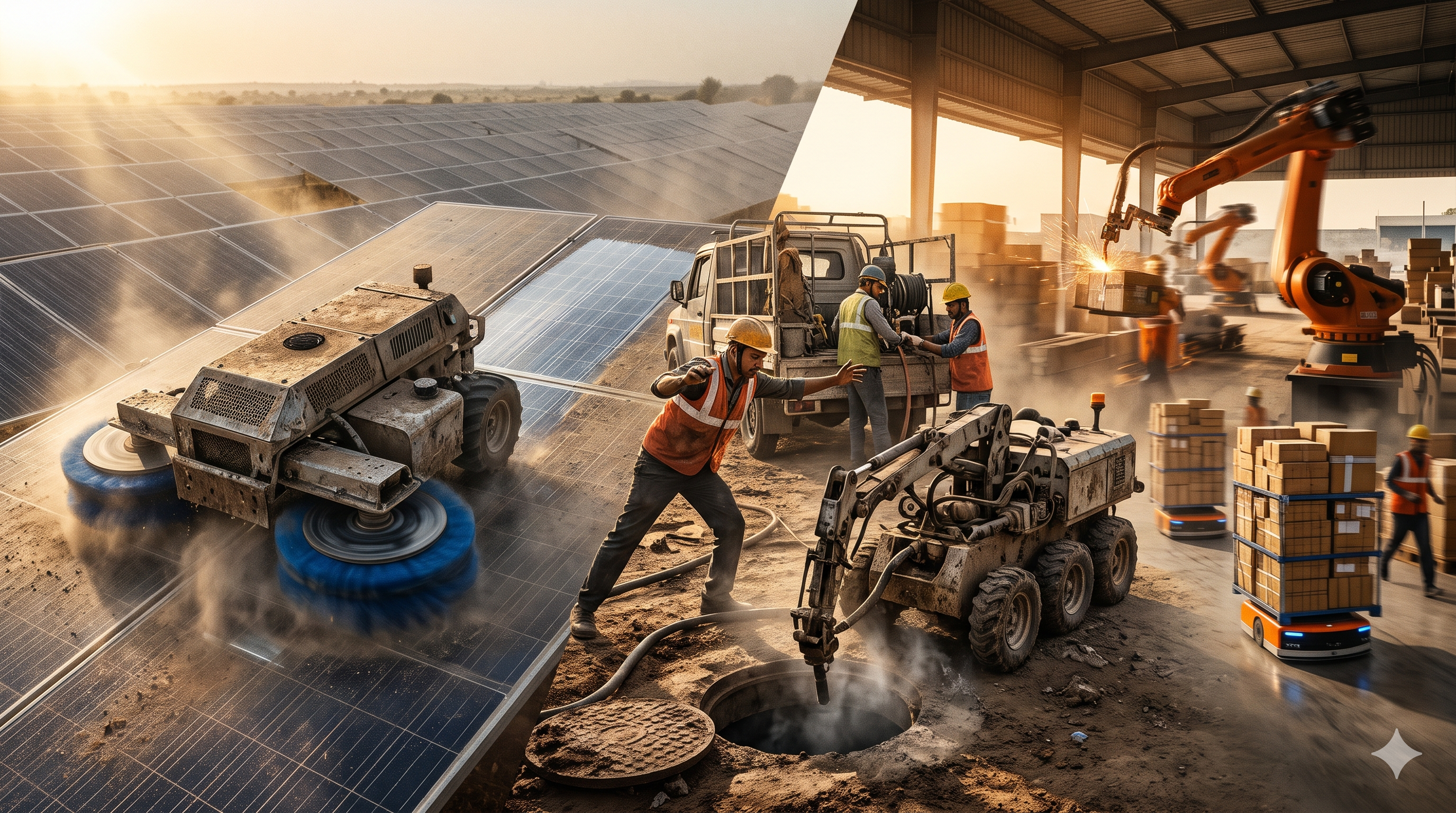
India’s robots earn their money in sewers, warehouses and solar parks, and the humanoids are still in pilots. Demand is real: India is now the world’s sixth-largest market for industrial robots. The gap is real too, since 85 to 90% of robot component value is imported. India’s edge is in local problems, software, service and trust.
Rokae's new certification against a Chinese AI chip splits its software into a "big brain" and "small brain" — the same architecture Figure AI and NVIDIA independently published. The industry markets the slow half; the fast half decides whether robots actually work.
Two robotics announcements this week shared the number 1,000. Only one of them describes machines that are actually running.
Sixteen new mobile robots launched in China in October 2026 as humanoid procurement bids fell 46 percent month over month, together mapping a market shifting toward narrower, purpose-built hardware over general-purpose platforms.
Stanford's One Hundred Year Study on AI has named physical AI and embodied intelligence a grand challenge in its third major report, identifying long-horizon planning, dexterous manipulation, and formal performance guarantees as the unsolved problems separating today's robotics demonstrations from reliable deployment.
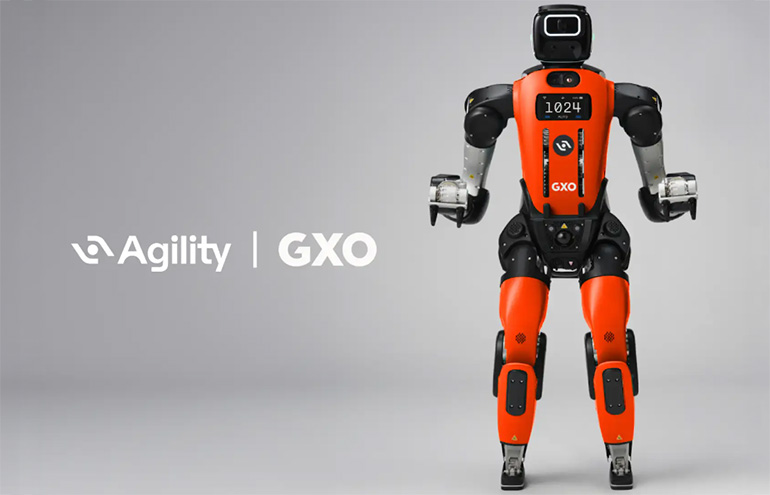
Agility Robotics' Nasdaq debut was covered worldwide as humanoid robotics' coming-of-age moment. Its own SEC filing tells a less flattering story: a going-concern warning from its auditors, and more than half of its 2025 revenue traced to five robots bought by one of its own investors.
Apple trained a humanoid control system almost entirely in simulation and ran it on an off-the-shelf Unitree G1, a sign that robot software and robot hardware are becoming separate markets buyers should negotiate accordingly.
Beijing's new robot identification rule is being sold as a safety and traceability upgrade. The number that actually matters in the draft is a 300% cap tying this year's code requests to last year's shipped output, a production governor arriving just as officials warn of a robotics capacity bubble.
Unitree's own IPO filings show its humanoid and quadruped lines are still mostly hand-assembled, and the math explains why: automation barely pays at Chinese wages. A new US import rule just made the opposite true for anyone selling robots into America.
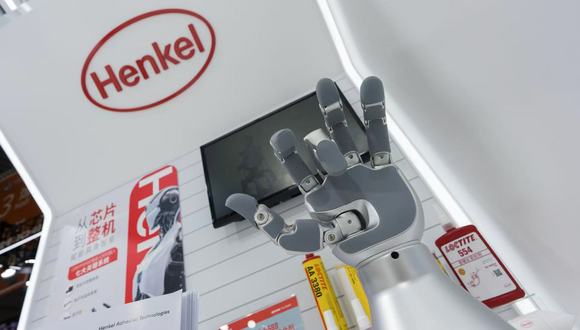
At the China International Import Expo, Henkel detailed a 70-point materials strategy for humanoid robot hands, skin and joints, arguing that adhesives and thermal materials, not AI software, are the real bottleneck to factory-ready robots.
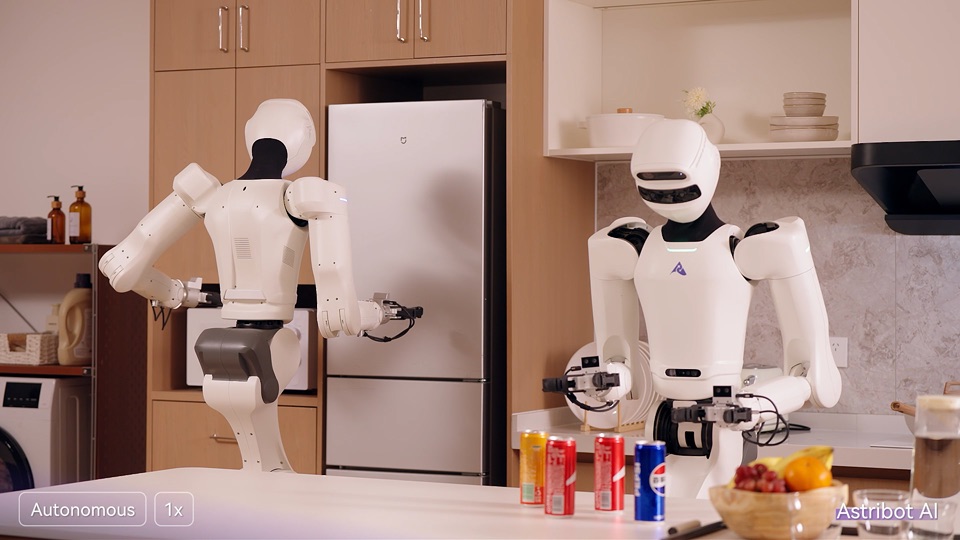
Shenzhen's Astribot released CoMind, a framework that lets paired robots share only task-relevant visual context instead of raw video, lifting real-robot task accuracy while cutting inter-robot communication volume by about 80 percent.