News and analysis on Asia's robotics industry from our research desk.
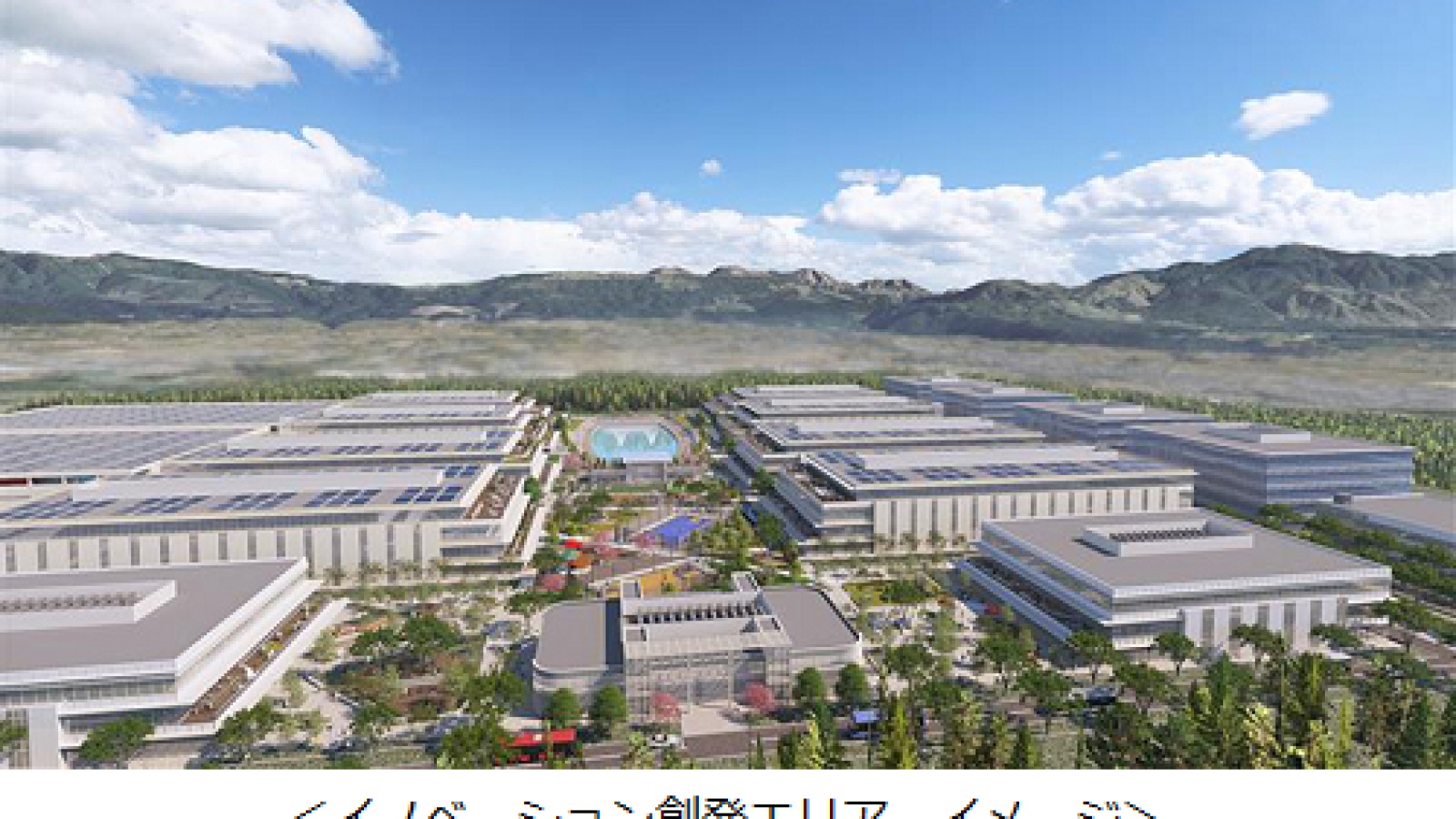
Mitsui Fudosan and Kumamoto Prefecture launched Japan’s first physical AI semiconductor centre (KSCM/PASTEC) adjacent to TSMC’s JASM fabs, with seven founding MOUs including Taiwan’s ITRI and Hsinchu Science Park, opening FY2027. Read as real-estate capital and regional government financing the robot economy’s chip-integration layer, and as a Japan-Taiwan industrial corridor milestone.
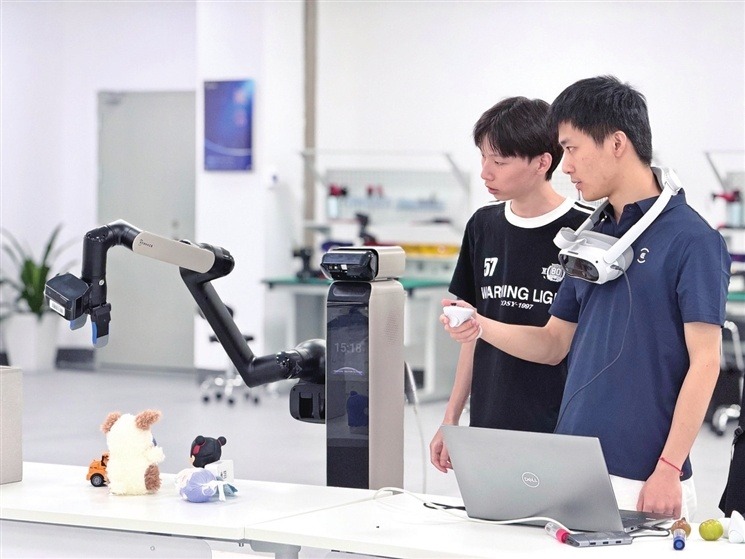
Unit 8200 alumni Jonathan Jacobi and Gal Niv emerged from stealth with Index Ventures and Ribbit Capital leading, plus angels from OpenAI, Anthropic, xAI, Thinking Machines, and Cognition. Over 100 in-house robots are publicly drivable online, doubling as an interaction-data flywheel. Thesis: the human-robot interface layer is the industry’s missing GUI moment. Skeptical frame preserved: no disclosed business model.
Naver shares jumped more than 10 percent after disclosing Nvidia will take 7.2 million new shares at KRW 204,500, a 4.5 percent stake making it a top-three shareholder. Brookfield adds up to US$9 billion as capital partner for the GAK Sejong expansion to 200 MW by 2028 on Vera Rubin and Blackwell platforms. Framed as vendor financing with equity upside and the clearest receipt yet of the sovereign-AI buildout. Robotics angle: Naver Labs’ 1784 robotics program and the AI-factory substrate for physical AI.
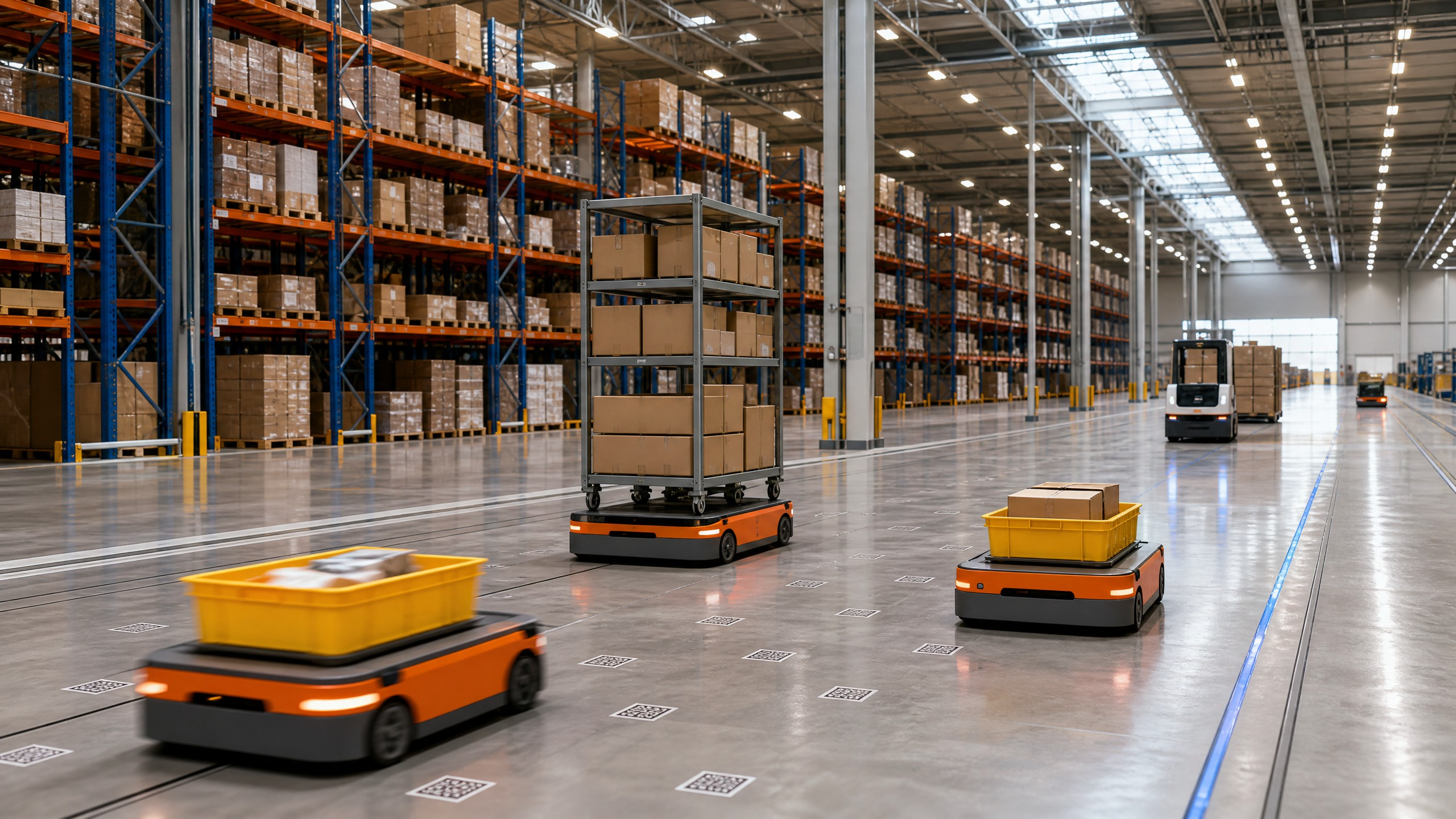
Mobile robots for moving goods are now the largest professional service robot category sold worldwide, with 102,900 transportation and logistics units shipped in 2024 according to the IFR. This series opener explains the fundamentals: what separates an automated guided vehicle from an autonomous mobile robot, how SLAM navigation actually works, the six subsystems every machine shares, the safety standards that govern them, and an original decision framework comparing AGVs, AMRs, and fixed conveyors for buyers planning their first project.
Chinese entertainment celebrities who once parked their wealth in hotpot chains and milk-tea franchises are now investing in embodied AI. Actor Huang Xiaoming's family office has backed an AgiBot-incubated robot rental platform now valued near RMB7 billion and a dexterous-hand spinoff valued near US$1 billion; Yuehua Entertainment took an angel stake in the same rental venture; and Giant Star Legend, the Hong Kong-listed company built on Jay Chou's brand, formed a 50/50 joint venture with a Unitree subsidiary that has already booked roughly RMB120 million in consumer robot orders. This Article examines what celebrity capital's arrival says about China's embodied AI cycle: distribution power meets hard tech, late-cycle froth meets genuine consumer demand, and the history of celebrity restaurant failures offers both a warning and a surprisingly instructive playbook.
Ecovacs, the Suzhou company that leads the world in robot vacuums, has fully open-sourced its Bajie embodied robot, from hardware design to the underlying system, and opened a physical Bajie Open-Source Innovation Space in Suzhou, with the announcement covered by QbitAI from the July 25 event. The wheeled, one-armed home robot runs a 7-billion-parameter model locally on dual RK3588 chips, and chairman Qian Dongqi paired the giveaway with a contrarian argument: household robots do not need to be humanoid, end-to-end VLA models are overrated for homes, and embodied AI's ChatGPT moment has not arrived.
A teaser poster published on July 25 by the WeChat account of BYD's Di Space experience venue in Zhengzhou shows a humanoid robot silhouette and promises a debut in early August. BYD has not confirmed details, but the signal fits a documented buildup: a dedicated embodied AI team under its 15th Business Division since late 2024, executive vice president Stella Li's stated goal of putting two or three robots in every BYD store, and a planned open robot platform. The world's largest EV maker appears weeks from showing its first humanoid.
Nikkei xTECH published a filmed teardown of Unitree's G1 humanoid on July 23, in which Japanese engineers disassembled the RMB85,000 (about US$11,900) robot and concluded that closing the gap with China in humanoids in the short term is probably not realistic. Chinese state media amplified the verdict within 48 hours, with CCTV News and Global Times pushing the story worldwide by July 26. The engineering findings, from four-in-one joint modules to hidden wiring, matter more than the theater, and one detail cuts both ways: the analysis points to Japanese components inside.
KAIST announced on July 26 a joint center with Nvidia to develop physical AI that learns from real human motion data. The Human Physical Intelligence Technology Center, co-directed by wearable-robot expert Kong Kyoung-chul and bio-robot expert Kim Jung, will build a Human Motion Foundation Model that predicts and generates human movement, with applications spanning wearable robots, humanoids, rehabilitation, and digital healthcare. It is the second KAIST-Nvidia institution announced in three days, and its raw material is a data asset that internet-trained models cannot replicate.
Hyundai Motor Group Executive Chair Chung Euisun used the San Francisco AI Summit to declare the group's evolution into a physical AI solutions company, backed by the most specific capacity commitment any automaker has made in humanoid robotics: a United States production system capable of building 30,000 robots a year by 2028. The plan centers on Boston Dynamics' electric Atlas humanoid, 50,000 Nvidia Blackwell GPUs, a Google DeepMind model partnership, and roughly US$5.97 billion for a Saemangeum AI Valley in Korea that includes contract robot manufacturing for smaller firms.
In a single day, AgiBot hired three banks for a Hong Kong IPO, Horizon Robotics borrowed US$450 million at zero interest, PsiBot became China’s 22nd embodied AI unicorn of the year on a carmaker’s money, and Washington voted to bar the Pentagon from Chinese humanoids. Read together, these are not four stories but one: the smart money in China’s robot boom has repositioned from funding deployment proof to engineering exits. This analysis traces the capital cycle from venture rounds through strategic money to public listings, examines what the rush to price the sector says about its operating reality, and identifies the signals that will mark the exit window’s closing.
July 2026 closed with humanoid robotics venture funding at 8.7 billion dollars year to date, but the month's defining pattern was structural rather than volumetric: capital split into three distinct layers with different instruments, buyers, and risk appetites. Listed platforms raised at near-zero cost through convertible bonds and IPO pipelines, strategic and industrial acquirers moved on control positions, and angel investors repriced the component layer of hands, actuators, and perception. The monthly conclusion is that investors are no longer buying a single robotics story but underwriting three different businesses.