News and analysis on Asia's robotics industry from our research desk.
Mid-2026 marks a turning point for humanoid robotics as China mandates large-scale deployment, South Korea builds training infrastructure, and Figure AI scales manufacturing for real-world fleet growth.
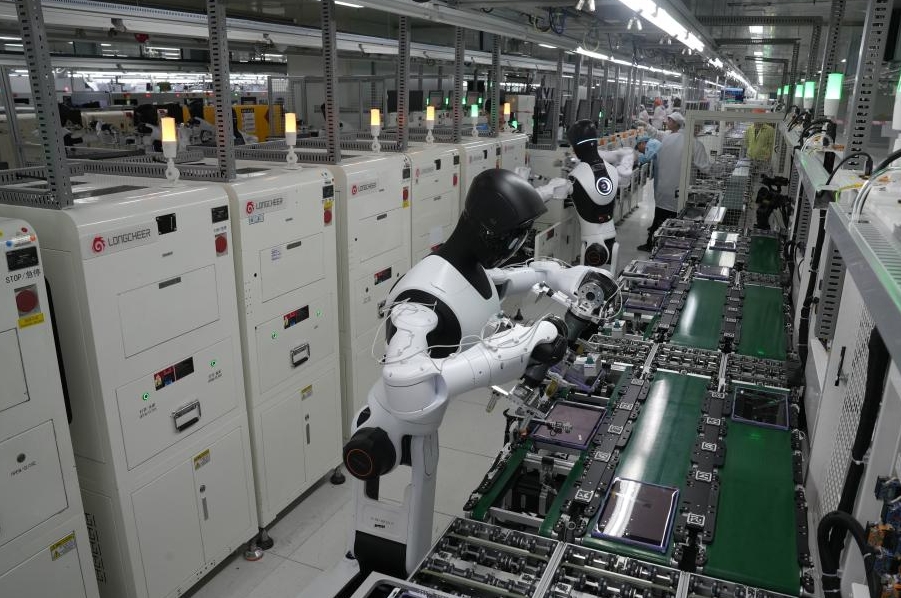
Humanoid robotics crossed a major threshold in June 2026, with Boston Dynamics pushing Atlas toward industrial general intelligence, Figure AI ramping production to one robot per hour, and Siemens and NVIDIA confirming the first real factory deployment of a humanoid robot in Europe.
China is rapidly advancing robotics and embodied AI through strong state backing and private-sector innovation, with factories already using low-cost, highly precise machines that can learn new tasks quickly and cut defect rates. Its cost and speed advantages are pushing Japan, South Korea, and Southeast Asia to adapt, while Western manufacturers face growing pressure to close the gap in mid-tier automation.
The 2026 World Artificial Intelligence Conference (WAIC) will convene in Shanghai from July 17 to 20, serving as China's most strategic AI summit. Co-hosted by ten national ministries and the Shanghai municipal government, WAIC 2026 represents a critical inflection point. Moving beyond the pure capability demonstrations of previous years, the event will focus heavily on operationalizing sovereign AI infrastructure—spanning domestic compute substitution, open-model ecosystems, and the aggressive
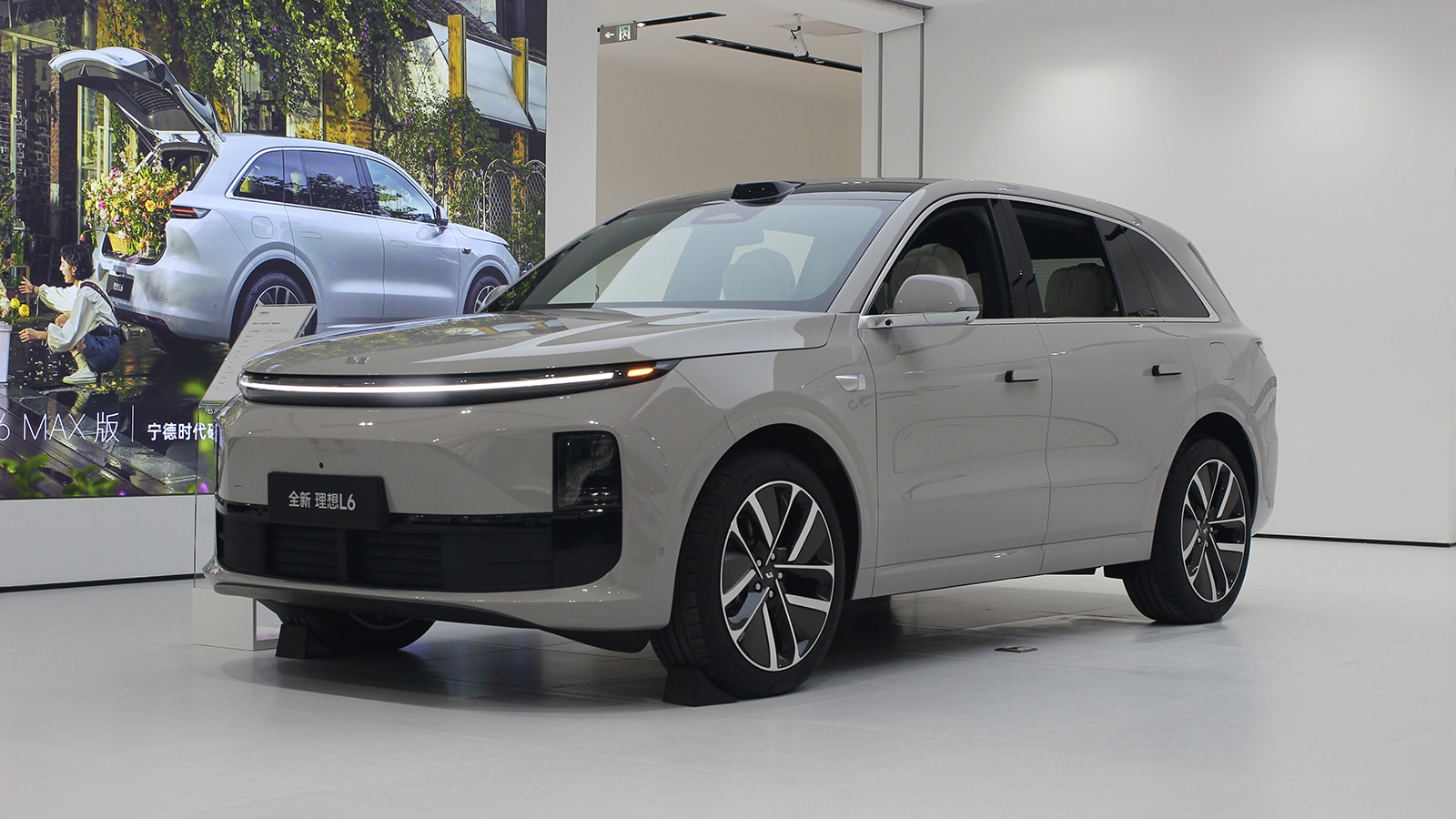
At the recent Livis Day event, Li Auto announced the evolution roadmap for its Mach VLA (Vision-Language-Action) model, targeting deployment to AD MAX users by Q3 2026. With a stated goal of achieving feature parity with Tesla's FSD V14 by Q4 2026, the announcement highlights the deep technological convergence between autonomous driving architectures and the 'brain' infrastructure required for humanoid robotics.
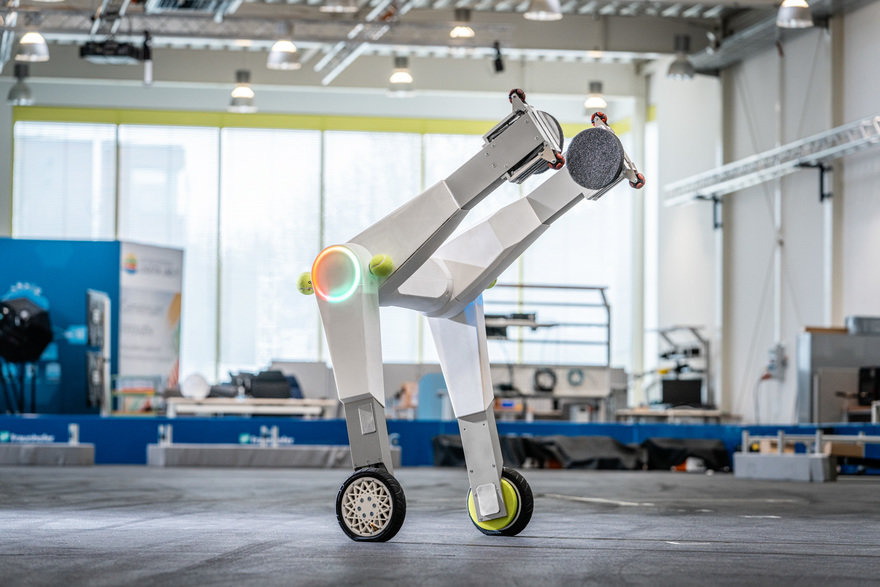
While the global robotics industry races to perfect bipedal humanoids, Genesis AI, led by Chinese-American CEO Zhou Xian, has unveiled 'Eno', a radically different non-humanoid robot. Featuring a 'no head, no feet, triple-folding' form factor, Eno prioritizes functional versatility and spatial adaptability over anthropomorphic aesthetics, suggesting that the ultimate form factor for embodied AI may not be a reflection of human biology.
Xingyuanzhi Robot (星源智机器人), an embodied AI startup incubated by the Beijing Academy of Artificial Intelligence (BAAI), has surfaced in mid-2026 coverage following its 200 million RMB Angel funding round. Backed by ZhongKe Chuangxing, Hillhouse Capital, and others, the company is developing a 'universal embodied brain' for physical world interactions, signalling a critical shift in venture capital from hardware assembly toward foundational cognitive architectures.
June 2026 marked a major turning point for embodied AI, with China pushing humanoid robot deployment at national scale, Alibaba releasing a three-model robotics stack, Zhiyuan setting a table-tennis milestone, and Europe answering with major funding and new robot form factors.
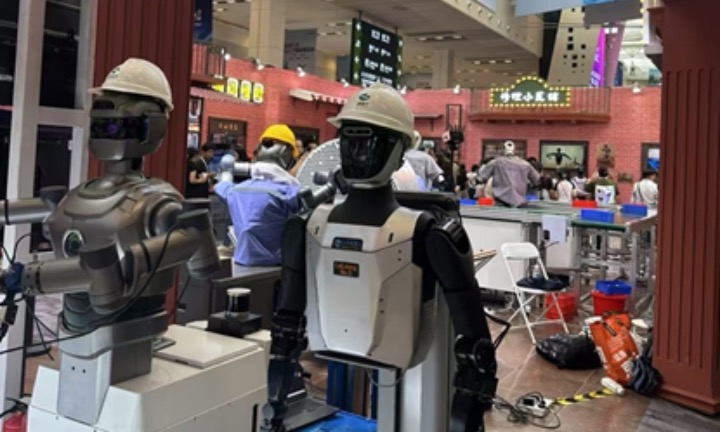
Tsinghua University spin-off Phi-Bot has deployed its industrial-grade Phi-Bot X1 robot into NIO automotive production lines, completing 21.5 hours of zero-error welding operations just one year after the company's founding — proving that real value in embodied AI lies in industrial execution, not just human resemblance.
Fengjiang Smart (FJ Dynamics), backed by Tencent, has filed for an IPO on the Hong Kong Stock Exchange, joining a growing queue of Chinese robotics companies heading to public markets in 2026 as internet capital converges with physical automation.
Open source already won in robotics. 55% of commercial robots shipped in 2024 run ROS, the open-source foundation. But ABB, FANUC, and Yaskawa are achieving operating margins above 20% on software and aftermarket services. Two contradictory facts — unless you understand they are measuring different layers. The debate you think is about code has already been settled. The debate that actually matters is about data. And data tends to close.
China's collaborative robot sector is experiencing a 2026 funding surge, with Tianji, Elite Robot, Faao, and Realman collectively raising billions of RMB. Capital is no longer just funding hardware — it is betting on the physical execution layer of embodied AI.