News and analysis on Asia's robotics industry from our research desk.
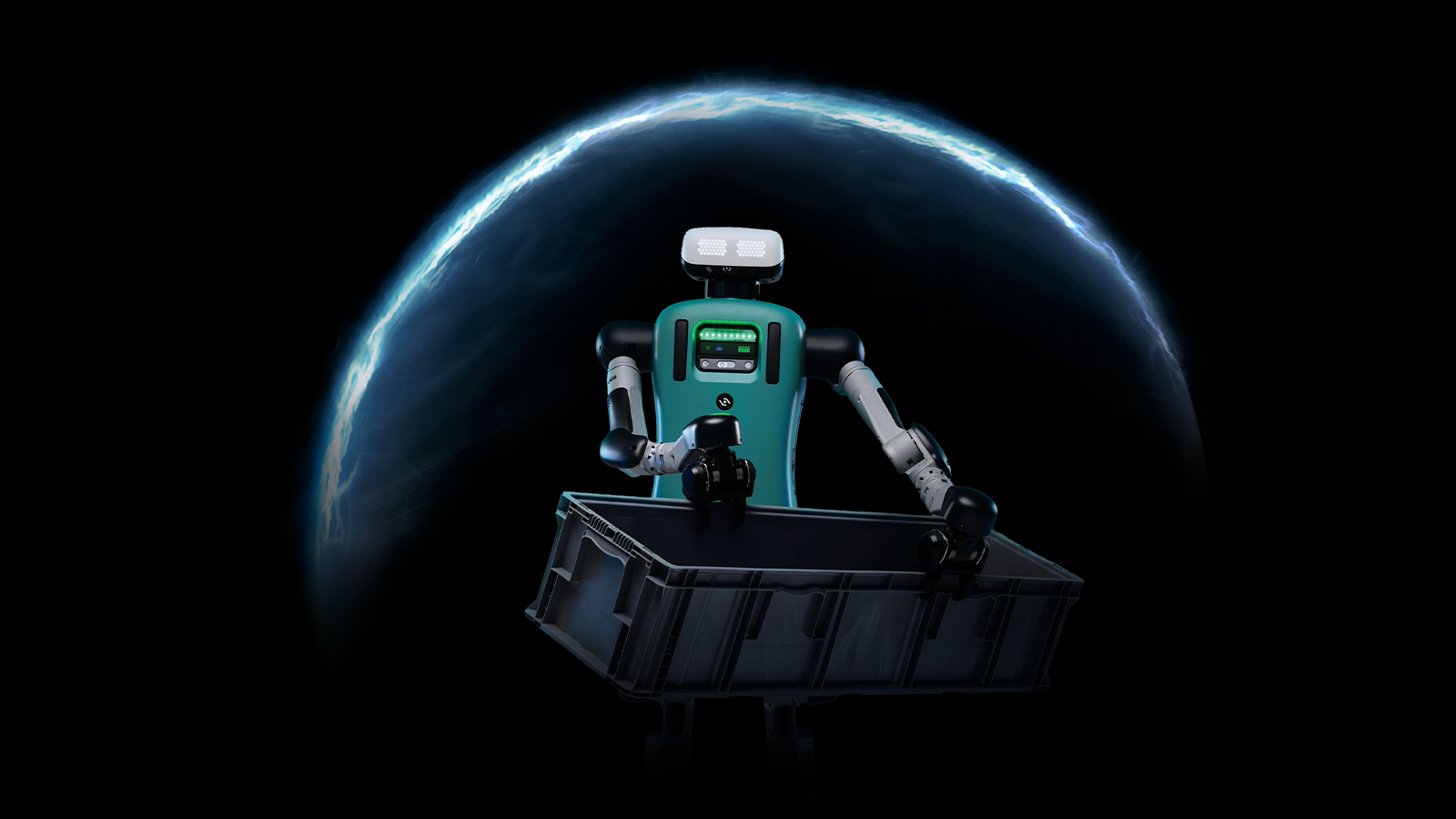
NVIDIA introduces Halos for Robotics, the industry's first full-stack safety system for physical AI, providing the essential certification pathway needed to move humanoid robots from pilots to production.
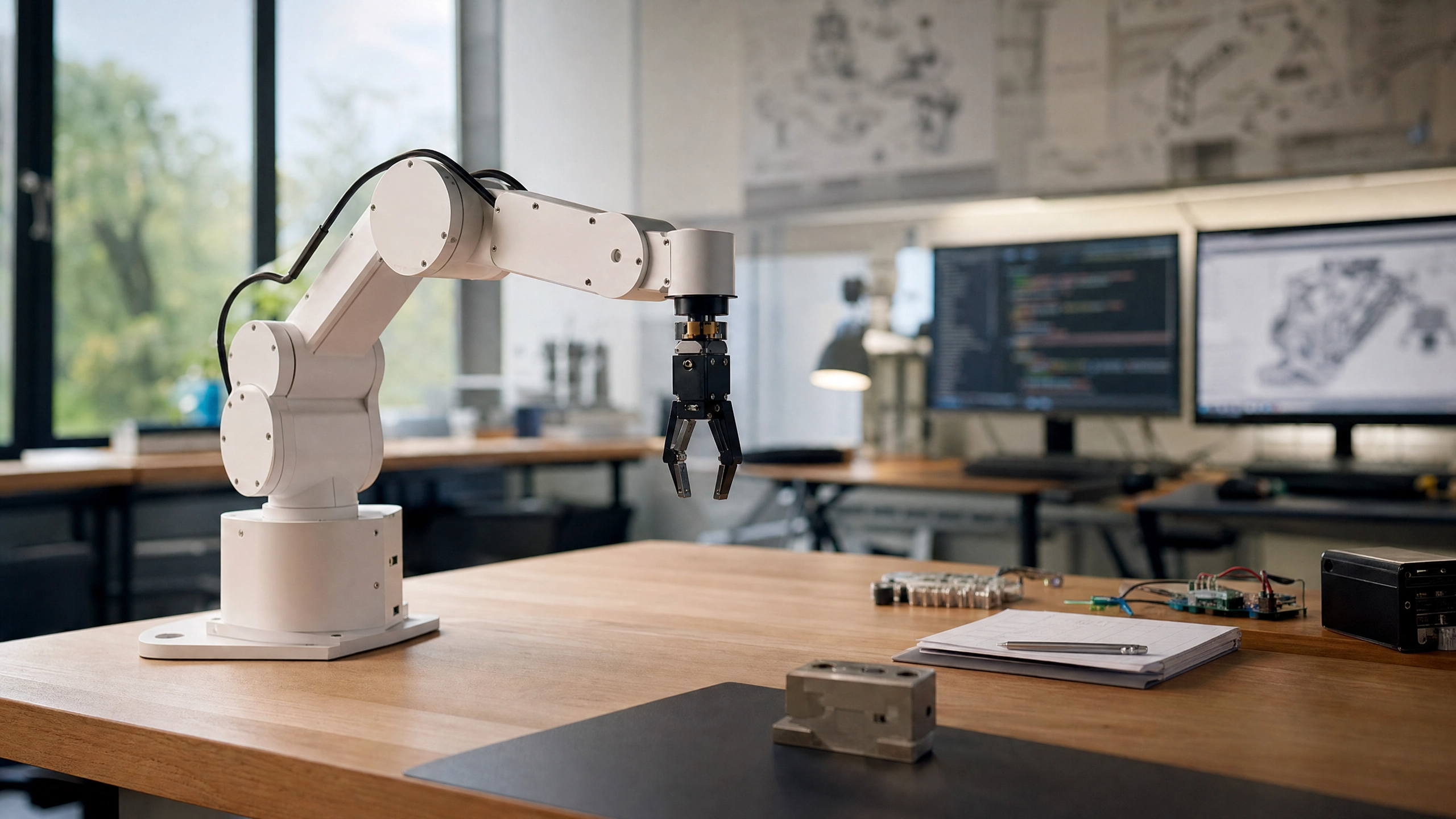
Elephant Robotics has launched the ultraArm P1, a desktop programmable robotic arm that brings industrial grade precision to the educational and research market. This release highlights how Chinese manufacturers are slashing the cost of the hardware infrastructure needed to train embodied AI models.
This article maps the full landscape explains why the government is treating embodied AI as a national strategic priority, and identifies the four signals (IPO filings, RaaS pricing, component cost trajectories, and secondary market formation) that will determine whether this sector transitions from demonstration to deployment at scale.
Open source already won in robotics. 55% of commercial robots shipped in 2024 run ROS, the open-source foundation. But ABB, FANUC, and Yaskawa are achieving operating margins above 20% on software and aftermarket services. Two contradictory facts — unless you understand they are measuring different layers. The debate you think is about code has already been settled. The debate that actually matters is about data. And data tends to close.
China's collaborative robot sector is experiencing a 2026 funding surge, with Tianji, Elite Robot, Faao, and Realman collectively raising billions of RMB. Capital is no longer just funding hardware — it is betting on the physical execution layer of embodied AI.
The article highlights rapid progress across robotics, including Tesla’s Optimus humanoid efforts, expanding Waymo robotaxis, autonomous delivery bots, and medical robots that improve precision and reduce procedure time. It also notes broader advances in industrial automation, agriculture, deep-sea exploration, and robot swarms, emphasizing that AI-powered robotics could reshape many industries while raising challenges around scaling, regulation, and ethics.
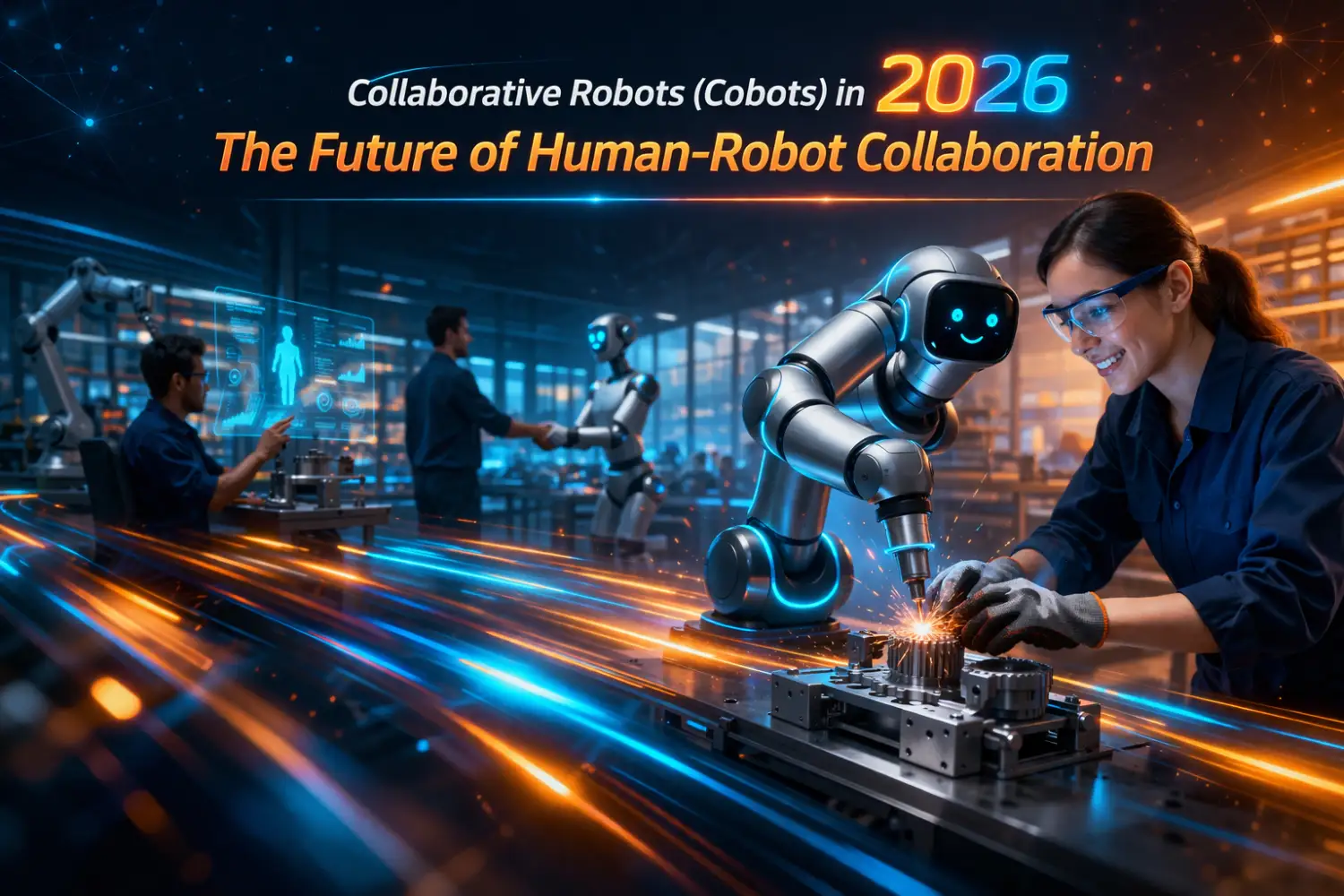
The article highlights major advances in collaborative robots, or cobots, emphasizing AI-driven sensing, adaptive learning, and improved safety features that enable humans and robots to work closely in manufacturing and healthcare. It also notes their growing practical impact, from boosting productivity and accuracy to lowering barriers for smaller businesses, while raising concerns about energy use, cybersecurity, job displacement, and privacy that will need careful regulation and reskilling efforts.
The article highlights major advances in collaborative robots, or cobots, including AI-driven sensing, predictive learning, and safer human-robot interaction, with examples from Universal Robots and recent robotics research. It also emphasizes their growing use in manufacturing and healthcare, while noting challenges such as energy use, cybersecurity, job displacement, and privacy that will need careful regulation and reskilling efforts.
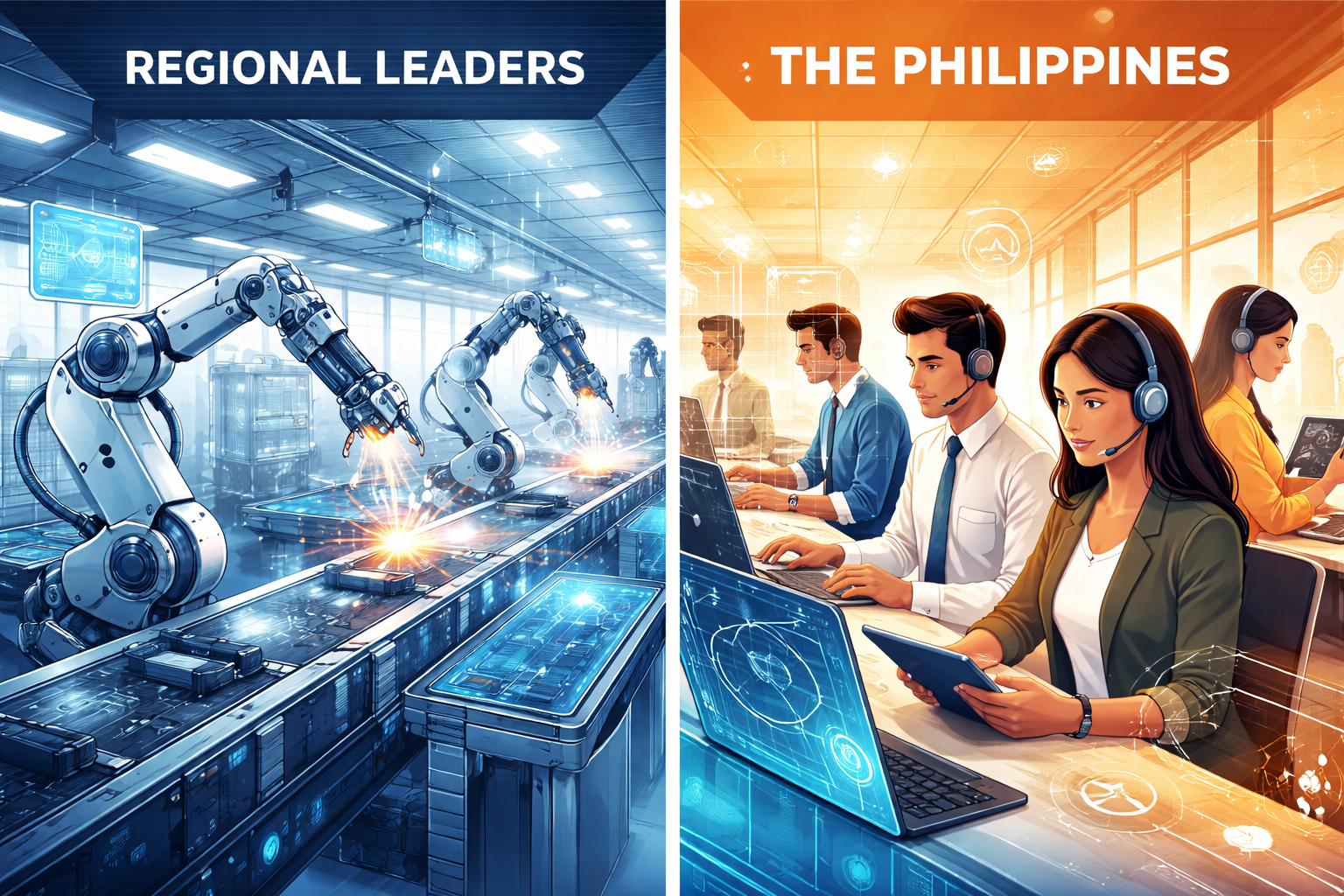
While Asia-Pacific leaders like Japan and China dominate industrial robotics hardware, the Philippines is taking a different path. Rather than competing in manufacturing, the country is leveraging its massive IT workforce to become the region's essential "human-in-the-loop" service layer, specializing in AI-enhanced outsourcing and software innovation.